Main Gurudwaras
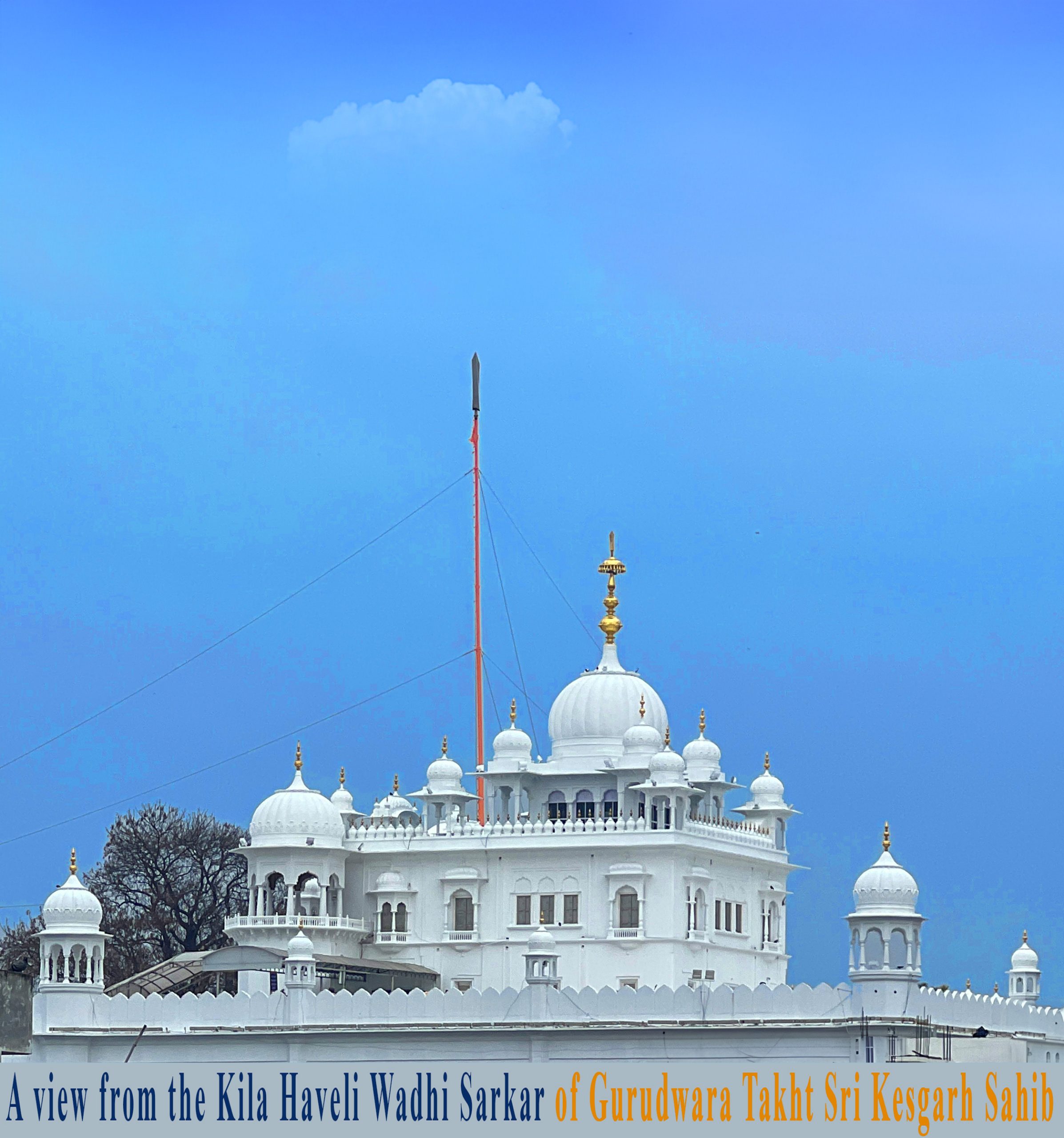
Gurudwara Takht Sri Kesgarh Sahib
Takht Sri Kesgarh Sahib is one of the five takhts of the Sikhs located in Anandpur Sahib, in Rupnagar district of Punjab, India.
The foundation stone of Anandpur Sahib was laid on 30th March 1689. It was here that the Khalsa was born, when the young Guru Gobind Singh called for a special congregation on the Vaisakhi day of 1699 with thousands of Sikhs in attendance.
Takht Sri Keshgarh Sahib stands at the place where Guru ji initiated the ‘Panj Pyaras’, the five beloved ones, and administered Amrit to them.
On this day Guru Gobind Singh destroyed the centuries old caste system and racial prejudices based on birth-right, caste and privilege. He formalised Sikh philosophy in the concept of the Khalsa.
Guru Gobind Singh required of the Khalsa to wear five Kakars ie. Kes, Kangha, Kara, Kachhehra and Kirpan at this sacred place. The Guru gave appellation of ‘Singh’ to men and that of ‘Kaur’ to women to be used after their first names.
Gurudwara Sri Sisganj Sahib
Sri Guru Gobind Singh Ji travelled from Anandpur Sahib, to Kiratpur Sahib, to receive the head of his father, Sri Guru Tegh Bahadur Ji. Gurdwara Sri Bibangarh Sahib Kiratpur marks the spot where the sacred head was received and placed on a biban to be carried for cremation to Anandpur (at Gurdwara Sri Sis Ganj Sahib Anandpur) in a procession singing the sacred hymns from Gurbani. The cremation of the head of Guru Sahib was carried out here and a memorial Gurdwara in the form of a platform whithin a small room was constructed over the ashes by Guru Gobind Singh himself.
When Guru Gobind Singh left Anandpur Sahib, in December 1705, he visited this place and appointed Bhai Gurbakhsh Das as caretaker of this Gurdwara and began his final journey.
It is believed that the central pedestal of the Gurdwara is the oldest structure of Chak Nanaki-Anandpur Sahib. The renovation and enlargement of the monument were carried out under the supervision of Baba Seva Singh of Anandgarh during the early 1970’s. The original pavement in the front compound with old Nanakshahi bricks arranged in geometrical patterns is still intact.

Gurudwara Sri Bhora Sahib
It is believed to be the site where the Guru Gobind Singh Ji spent many years meditating and writing religious texts. This gurudwara is situated within the larger complex of Gurudwara Sri Keshgarh Sahib.
Gurudwara Bhora Sahib marks the actual location where the underground chamber for meditation was located.
A platform in the middle of the present basement marks the site of the original bhora. The Guru Granth Sahib is now seated on a platform on the ground floor.

Gurudwara Sri Mata Jito Ji
Situated in City Anandpur Sahib of Ropar Distt. Guru Gobind Singh Ji’s first wife Mata Jit Kaur died at Anandpur Sahib on December 5,1700. She was cremated in the outskirts of Chakk-Nanaki in the boundary of the village Agamgarh. Some one constructed a platform at the site where she had been cremated. Later, a Gurdwara Sahib was built by the Sikhs.

Gurudwara Sri Shaheedi Bagh
Gurudwara Sri Shaheedi Bagh Sahib in Anandpur Sahib has an oak tree from the time of Sri Guru Gobind Singh Ji. According to folklore, the oak tree dried out. The Sangat requested Guru Gobind Singh to help turn it green again. Guru Gobind Singh said that when a lady who has never scolded a man comes here, the tree would turn green again. One day a lady went for a bath there and the oak tree turned green. Guru Gobind Singh asked her how come she had never scolded a man. The lady shared her story, saying that she was part of a family of seven sisters. Their father had died when their mother was pregnant with the eighth child. Since there was no male heir, the property was seized by the government. By God’s grace, her mother gave birth to a son and their property was returned to them. From then on, she considered men a blessing and respected them. Guru Gobind Singh’s elephant, named Parshadi, was also kept here, tied to the same oak tree.

Gurudwara Sri Damdama Sahib
Gurudwara Damdama Sahib is located close to Gurdwara Sisganj Sahib. It shares the compound with Anandpur Bhora Sahib and Thara Sahib, also known as Guru ke Mahal. This gurudwara holds memories of Guru Tegh Bahadur’s residential quarters, where he welcomed and counselled Sikh sangats.
Guru Gobind Singh was designated as the tenth guru at this sacred place. The octagonal domed building we see today was constructed in the 20th century.

Gurudwara Sri Manji Sahib
Also known as Gurdwara Sri Dumalgarh Sahib, is located on the northern side of Takht Kesgarh Sahib.
It was at Gurdwara Sri Manji Sahib Anandpur that Sri Guru Gobind Singh Ji trained his sons in martial arts.
The place was used as a playing ground. Wrestling matches and other competitions were also held here.
On 2nd November 1703 when Ajmer Chand, the ruler of Bilaspur attacked Anandpur Sahib, Guru Gobind Singh was sitting here under a bunyan tree.
In the battle field, Sikhs under the command of Bhai Maan Singh Nishanchi (standard bearer), gave a befitting fight to the hill army. During the battle Bhai Maan Singh was wounded and the Khalsa flag was broken.
At this Guru Sahib tore a farra (small piece of cloth) from his keski (under-dumala) and set it in his dumala in the form of a hanging flag. Guru Gobind Singh declared that in future Khalsa flag shall never fall or get lowered.
Sikhs sitting near Guru Sahib tore farras from their under-dumalas and decorated them in their dumalas in the form of hanging flags.
The double storey domed Gurdwara Sri Dumalgarh Sahib owes its association to the Dumala (farra) incident of 2nd November 1703.

Gurudwara Sri Akal Bunga Sahib
This Gurdwara is situated opposite to Gurdwara Sis Ganj. Here, Guru Gobind Singh Ji addressed the Sikhs after the cremation of the head of Guru Tegh Bahadur Sahib. Guru Sahib asked the Sikhs to bow before the Will of the Almighty. He told them to be prepared for struggle for freedom of faith and war against tyranny and injustice.
Akal Bunga opposite Gurdwara Sis Ganj, within the same compound is a small shrine housed in an old building said to have been built by a pujari, priest, Man Singh in 1889. It comprises a pentagonal room on either side of a masonry pedestal on which the Guru Granth Sahib is seated behind glass panels. The pedestal marks the spot sitting where during the obsequies of his father, Guru Gobind Singh delivered a sermon to his followers.
Gurdwara Sri Bhibhour Sahib
Is situated in the Nangal City in Ropar Distt. It was here that Guru Gobind Singh came at the invitation of Raja Ratan Rai, staying for several months.
Staying near Nangal for another nine months it was here that Guru Sahib wrote “Chaupai Sahib” Paath while sitting on the bank of river Satluj.
Guru Gobind Singh stayed here for about a year and composed hymns in praise of God. The Gurdwara is situated on the banks of the river Sutlej. This was among the happiest time of Guru Gobind Singh life when he had time to enjoy hunting and writing poetry in praise of God.

Gurudwara Sri Guru Ka Lahore
Is situated in the village Basantpur in Distt Bilaspur of Himachal Pradesh. It is situated on the border of Himachal Pradesh, only 12 km from Sri Anandpur Sahib.
Bhai Hari Jas ji father of Shri Mata Jito Ji came to Chak Nanaki (Sri Anandpur Sahib) for getting marriage fixed up with Guru Gobind Singh Ji (Engagement had already been done during the life time of Guru Teg Bahadur Ji). But the elders didn’t agree on barat to go to lahore. So Guru Sahib proposed that we shall create lahore here and Mata Jito Ji’s family may come here and marriage ceremony may take place. Later a little lahore was setup which exactly resembled to the nine bazaars of Lahore in village Basantnagar. And finally Guru Sahib’s marriage was performed here.

Gurudwara Sri Bhai Jaita Ji
Lorem Ipsum is simply dummy text of the printing and typesetting industry. Lorem Ipsum has been the industry’s standard dummy text ever since the 1500s, when an unknown printer took a galley of type and scrambled it to make a type specimen book
Gurudwara Bhai Kanhaiya ji
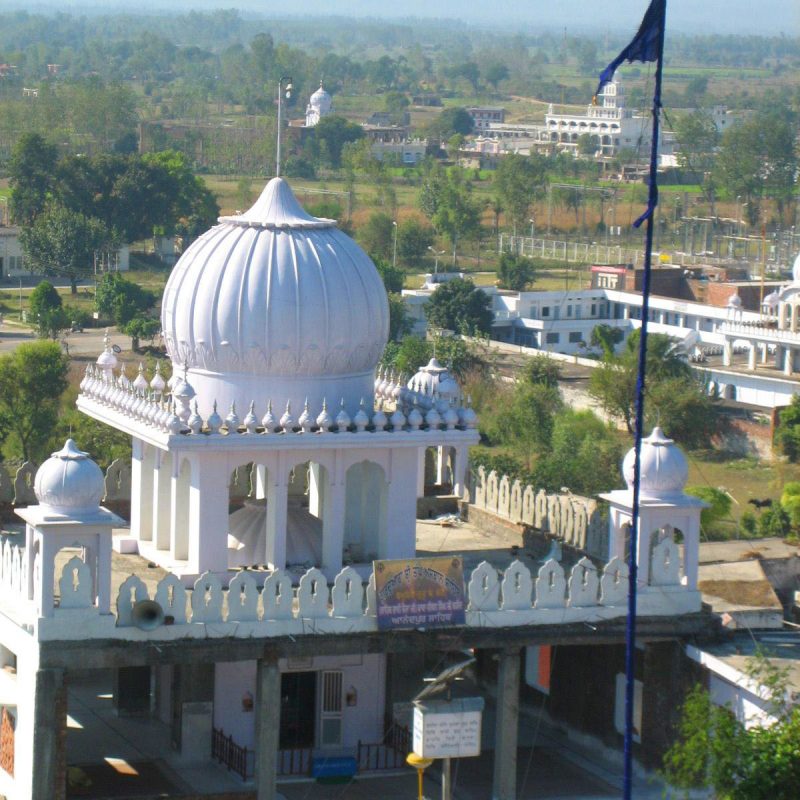
Bhai Kanhaiya ji was founder of Sevapanthi or Addanshahi sect of the Sikhs. He was born in a Dhamman Khatri family of Sodhara near Wazirabad in Sialkot District (Now in Pakistan). His father was a wealthy trader, but he himself being of a religious bent of mind left home when still very young and roamed about with sadhus in search of spiritual peace.
His quest ended as he met Guru Tegh Bahadur 1621-75) and accepted initiation at his hands. Kanhaiya established a dharamsal at Kavha village in the present Attock district of Pakistan, which he turned into a preaching centre. His special mission was selfless service of humanity with no distinction of nationality, caste or creed.
In the battels with muslim army Bhai Sahib was always seen carrying Mashak, a pouch made of goat skin to carry water. One day during the battle Bhai Sahib was seen offering water to muslim soldiers also. This matter was reported by sikhs to Sri Guru Gobind Singh ji, when Guru Sahib asked Bhai Sahib about this, he replied that he sees no mughal no sikhs in the battle field, but they are all human beings. Guru ji was very happy to hear this and blessed Bhai Sahib for this

Gurudwara Sri Kalgi Dhar Sarowar
Lorem Ipsum is simply dummy text of the printing and typesetting industry. Lorem Ipsum has been the industry’s standard dummy text ever since the 1500s, when an unknown printer took a galley of type and scrambled it to make a type specimen book